
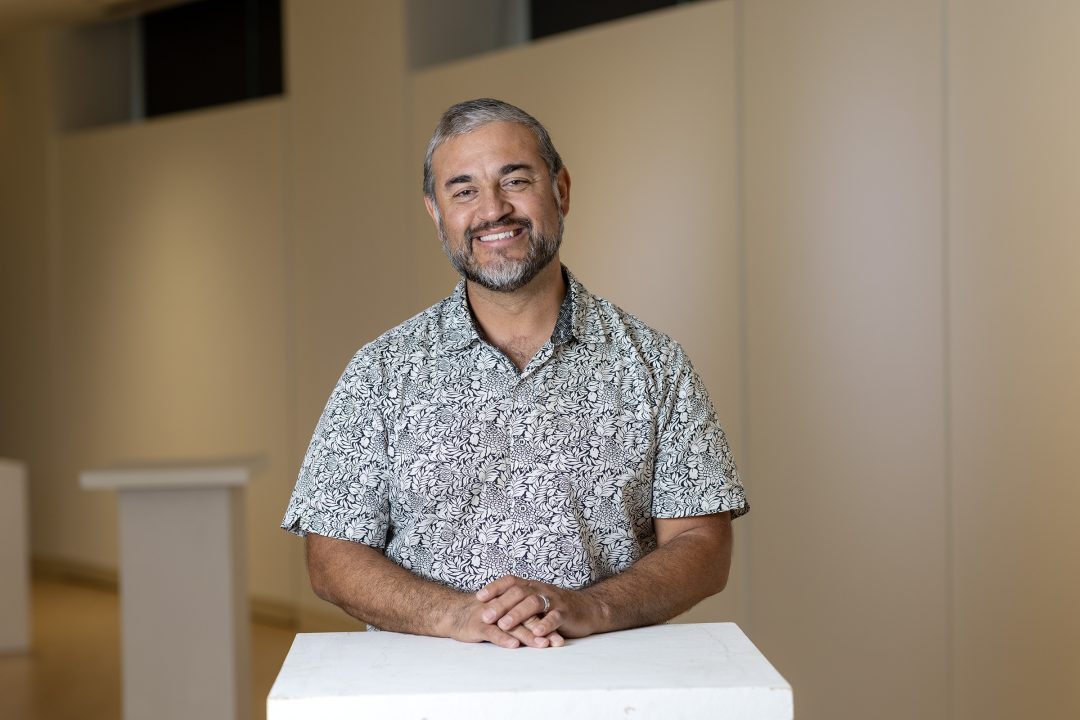
Art Professor Angel Fernandez at TCC Trinity River wants to make art accessible, relatable and understandable while helping students see its relevance to their lives. His work has been exhibited throughout the United States and overseas.
What do you like most about being a faculty member?
In Art Appreciation, I love hearing students say they have never thought about art in a particular way before or that they never considered unconventional materials to be art.
In my studio classes, I enjoy watching students grow and develop their skills, especially in areas such as drawing and observation.
Can you share some of your favorite experiences about teaching students and helping them appreciate art?
Here’s one: I introduce students to the work of Vik Muniz, a Brazilian artist who creates remarkable portraits using unconventional materials such as sugar and garbage. Students are often fascinated by the innovation and creativity in his work.
Another meaningful experience comes through my museum assignment, which requires students to visit the Modern Art Museum of Fort Worth. Seeing works we discuss in class in person helps bring the material to life and often creates a lasting impression.
Have you always had a love of art? What do you appreciate about this discipline?
I have been surrounded by creativity and making things for as long as I can remember. From musicians and performers in my family to the fabrication shop at my grandmother’s home in Mexico, creative expression has always been a part of my life.
What I appreciate most about art is its ability to transform the way we see the world. Art has the power to shift perspectives, spark conversations and connect people. I think art is magical.
What media most interests you as an artist? What do you enjoy about working with them?
My formal training is in sculpture, a discipline that allows artists to work across a wide range of media. I love drawing for its foundational nature and accessibility. You can draw with almost anything and on almost anything.
I also have a deep appreciation for photography and video. I enjoy their narrative qualities and the unique relationship they have with reality. Whether it is a still image or a moving image, the finished work captures something that actually occurred in front of the lens.
What inspires your work?
My inspiration comes from many sources, including my family, my identity and current social issues and events. My mother, who passed away in 2006, also continues to inspire my work in meaningful ways.
My wife, Winter Rusiloski, who teaches painting at Baylor University, has always been a tremendous inspiration through her prolific artistic practice.
Your work has had an international reach. Please tell us about your recent exhibitions and recognitions. Do you have any upcoming exhibitions or events?
I have been fortunate to receive incredible support from TCC and my community throughout my artistic career. A faculty development leave in 2017 provided the opportunity to pursue research that led to my first international exhibition at the CICA Museum near Seoul, South Korea.
The drawing and video documentation from that exhibition was shown at K Space Contemporary in Corpus Christi in 2019, where it received a Third Place Award from prominent museum director Suzanne Weaver.
More recently, my wife and I presented a two-person exhibition, Border Lines: Demarcation on the American Landscape | Glasstire at K Space Contemporary that Glasstire called one of the “Top Five in Texas.” Being included on that list is one of my proudest accomplishments, given its statewide scope and recognition.
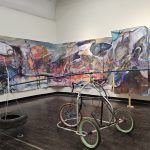
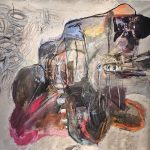
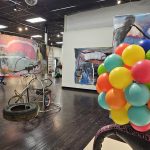
Looking ahead, we will be exhibiting a video drawing work at the CICA Museum again this year, and I am excited to continue sharing new work with audiences both nationally and internationally.