
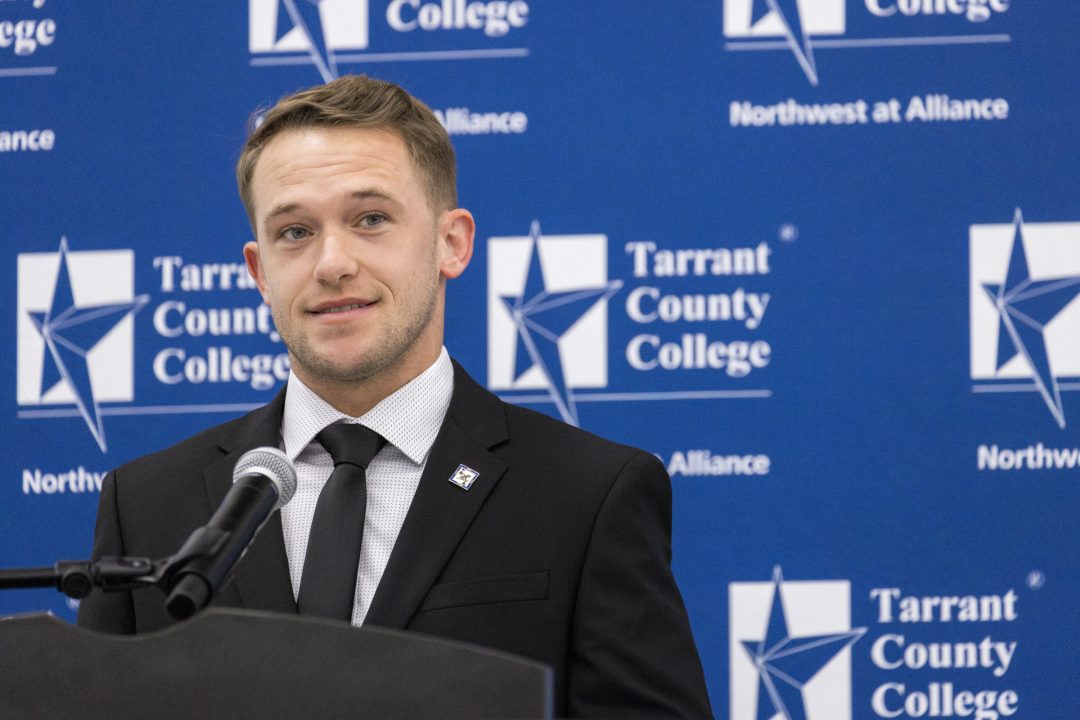
Isaiah Eilander didn’t set out to become a finish inspector. He set out to become a father.
When he learned a baby was on the way, something shifted inside him — the kind of shift that asks: What are you going to do now?
He started searching. He scrolled and clicked and searched some more, until one day the internet offered him something he hadn’t expected: non-destructive testing. NDT. A field he’d never heard of, in a world he’d never imagined — where you could see inside metal without breaking it, find flaws invisible to the naked eye, and, in doing so, keep people alive.
And it just so happened that Tarrant County College was about to launch its first NDT program.
He applied. He was accepted. And the moment he held an ultrasonic probe for the first time, something lit up inside him. “I felt like a kid again,” he would say later.
The wonder in that lab was almost palpable — every student leaning in, eyes wide, as sound waves did what eyes cannot. TCC gave those students high-quality equipment, instructors who knew the field, and a rotating cast of industry professionals who opened windows into careers Eilander hadn’t dared to picture for himself.
He walked out of that program with more than a certification. He walked out with a direction.
TCC’s Non-Destructive Testing program prepares students for in-demand careers across aerospace, defense and advanced manufacturing, industries that depend on trained inspectors to ensure the safety and integrity of critical components. The program, part of TCC’s growing workforce education portfolio, combines hands-on training with industry-relevant construction designed to move graduates directly into the field.
Eilander was among the program’s early completers. His trajectory is a testament to what that preparation makes possible. What made him stand out wasn’t just ability — it was urgency. Program Instructor/Coordinator Venecia Queen saw his potential from the start.
“I knew he was destined for success when he asked me if he should apply for a job two weeks into class starting. I said yes! ‘They cannot take away your birthday.’ I wanted him to know there was nothing to lose. Well, they said no. He kept trying and he was the first student to land an NDT job. This was only two months into class.”
All of this — the job applications, the rejections, the persistence — was happening while Eilander navigated something more personal. His daughter had just been born. Sleep was scarce. The demands on him were coming from every direction.
“He pushed through countless nights of no sleep with a newborn and never missed a beat,” Queen said. “It was exciting to share this experience with him — the stories of being a new father and a straight-A student.“
Today, Eilander’s days begin with routine and end with consequence. He runs through daily checks on his systems, confirms everything is functioning properly, contacts his lead to see what’s critical, and then begins processing parts. The rhythm is steady, the stakes anything but ordinary.
Many of the components that pass through his hands are bound for military platforms — parts for the next generation of Army helicopters. Eilander was among the first inspectors to touch them. One day, he figures, he’ll tell his grandchildren about that.
There was the day he found a crack in a flight safety part. A fracture so fine it would have passed through lesser eyes, lesser equipment or a lesser inspector. But Eilander caught it. What could have happened without him is not a question with a comfortable answer. Catastrophic failure. Eilander sees lives on the other side of those words, and he carries that knowledge with him — not as a burden exactly, but as a reminder.
Every inspection matters. Every part has a destination. Someone will fly in what he clears. Someone is counting on him to be right.
“There are so many systems and technologies that depend on NDT,” he says. “That can weigh on you at times.” And yet, rather than shrink from the weight, Eilander leans into it. He has a family to provide for. He has work that is genuinely interesting. And he has the satisfaction of knowing that what he does each day keeps defective parts from ever entering service.
To anyone considering this path, he offers simple advice earned through experience. “Apply for jobs you aren’t fully qualified for, ask relentless questions, and never burn a bridge. The NDT world is small, and reputations travel. Above all, never forget why you do this job.”
Eilander hasn’t forgotten. He found NDT out of necessity. He stayed because of something more — the kind of purpose that arrives quietly, takes hold, and doesn’t let go.